
PART 2 OF 3
How Ordinary Practices Get Caught
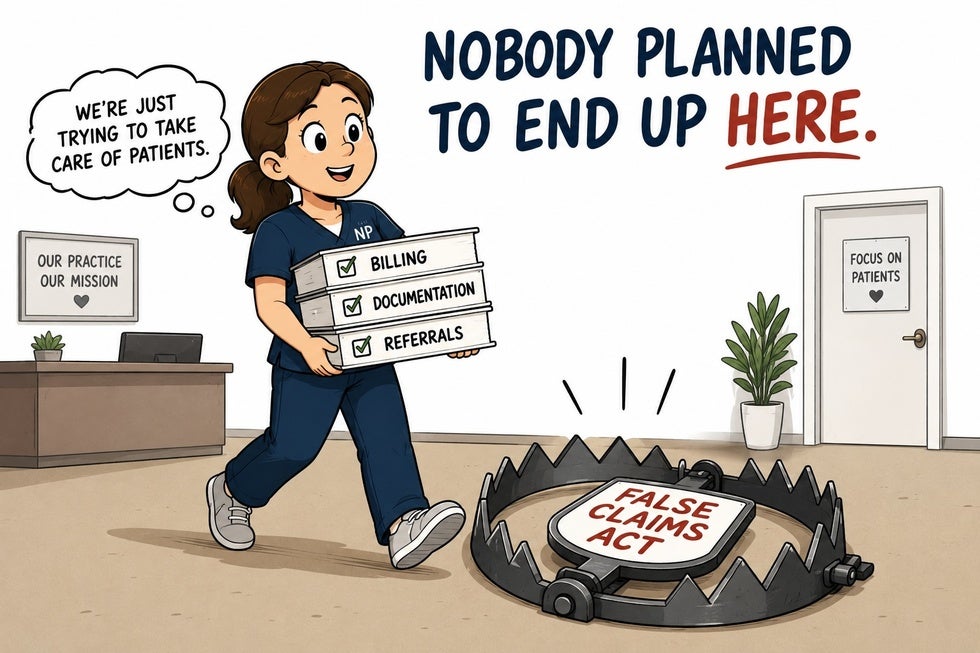
Very few practices set out to defraud the government. Far more stumble into FCA exposure through routine billing habits that drift out of compliance. Understanding the common fact patterns is the first line of defense.
The conduct that draws scrutiny
• Upcoding — billing a higher-level service or more complex code than the documentation supports (for example, routinely billing Level 4 and 5 office visits).
• Unbundling — separately billing components that should be charged under a single comprehensive code to increase reimbursement.
• Medically unnecessary services — ordering tests, procedures, or therapies that aren't justified by the patient's condition.
• Billing for services not rendered — including “phantom” visits, time not actually spent, or work performed by unqualified staff billed as if performed by a physician.
• Inadequate documentation — claims that the medical record cannot support, even where the service may have occurred.
The traps unique to healthcare
Two other statutes feed directly into FCA liability, and many owners underestimate them. A violation of the Anti-Kickback Statute — paying or receiving anything of value to induce referrals — automatically renders the resulting claims false under the FCA. The Stark Law, which restricts physician self-referral for certain services, works similarly: claims tainted by a prohibited financial relationship become false claims. Both are, in important respects, strict-liability traps where good intentions offer little protection.
The 60-day clock most owners miss
Perhaps the most dangerous trap is the one that operates after the mistake. Under the Affordable Care Act, an identified overpayment from Medicare or Medicaid must be reported and returned within 60 days. Sit on a known overpayment past that window — even one you didn't cause — and a simple billing error becomes a “reverse false claim” with full FCA exposure. Knowing about a problem and failing to act is often worse than the original error.
The pattern across all of these is the same: liability rarely turns on a dramatic scheme. It turns on documentation that doesn't match the bill, financial relationships that aren't papered correctly, and known problems left unaddressed.
West Coast Health Law offers a FREE consultation which you may schedule by clicking the button on our website.

Comments
There are no comments for this post. Be the first and Add your Comment below.
Leave a Comment