
BUYING A MEDICAL PRACTICE IN CALIFORNIA — PART 4 OF 4
Practical Implementation: From Letter of Intent to First Patient
A phased, sequenced plan for getting the deal done on time and in compliance.
Series: Part 1: The Framework | Part 2: The Legal Rules | Part 3: Common Mistakes | Part 4: Practical Implementation
The first three articles built the foundation: the framework, the rules, and the mistakes to avoid. This final article turns that knowledge into a working sequence. Think of it as a roadmap from first conversation to a fully operational, compliant practice you own. Timelines vary, but the order of operations rarely should.
Phase 1: Qualify yourself and the target (weeks 1–2)
Start with eligibility, because nothing else matters if you cannot lawfully own the practice. Confirm that you, or the professional medical corporation you will buy through, satisfy California's ownership rules. If outside capital is involved, sketch the friendly-PC/MSO structure now and have counsel confirm it is viable. At the same time, screen the deal against the OHCA notice thresholds so you know early whether a 90-day clock applies. Sign a confidentiality agreement and request the seller's high-level financials and corporate records.
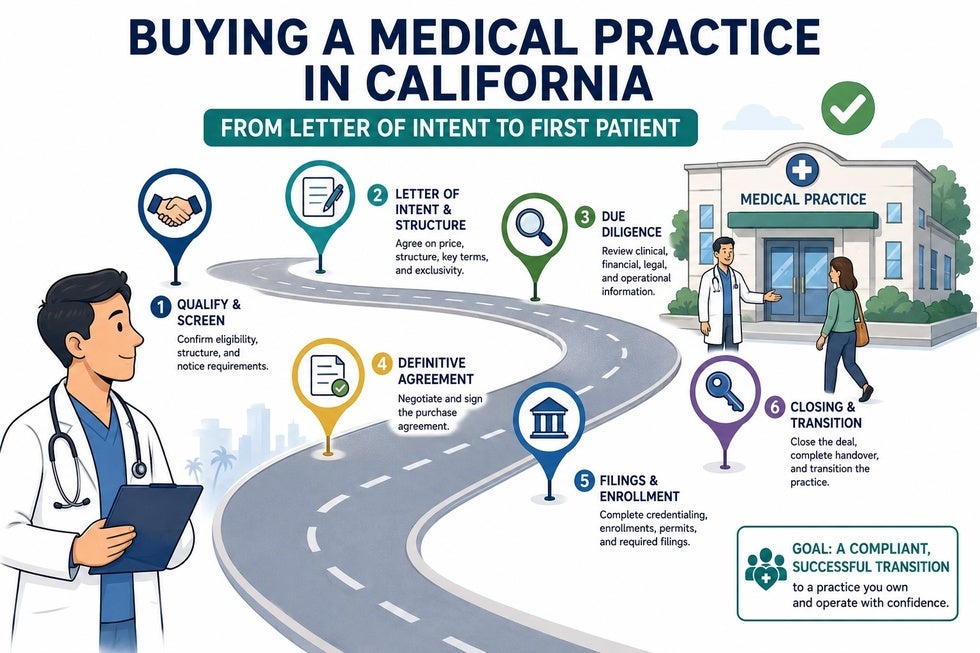
Phase 2: Letter of intent and structure (weeks 2–4)
Decide between an asset and a stock purchase, guided by the practice's payor mix, contract portfolio, and liability profile. Capture the agreed price, structure, key contingencies, and an exclusivity period in a non-binding letter of intent. Getting structure right here prevents costly renegotiation later. If the deal involves an MSO, agree in principle on the boundary between management services and clinical control before lawyers begin drafting.
Phase 3: Due diligence (weeks 3–8)
This is where deals are won or lost. Run diligence in parallel across several tracks:
• Clinical and regulatory: provider licenses and board certifications, malpractice claims history, DEA and controlled-substance protocols, HIPAA program, and any CLIA lab certification.
• Financial and billing: coding and billing samples, payor audit and overpayment history, accounts receivable quality, and reimbursement trends.
• Contracts and property: assignability of the lease, payor agreements, equipment leases, and vendor contracts; employment and independent-contractor agreements; and any restrictive covenants.
• Corporate: the seller's cap table and Moscone-Knox compliance, entity good standing, and litigation history.
Document every finding. Issues discovered here become price adjustments, indemnities, or closing conditions in the purchase agreement.
Phase 4: Definitive agreement (weeks 6–10)
Translate diligence into a binding purchase agreement. Pay particular attention to representations and warranties about licensure, billing compliance, and the absence of undisclosed liabilities; indemnification for pre-closing conduct (vital in a stock deal); a clear allocation of which assets and liabilities transfer; and covenants governing the transition, patient records, and any seller non-compete. If an MSO is part of the structure, finalize a management services agreement that keeps clinical control with the physicians and avoids the owner-replacement provisions California regulators have flagged.
Phase 5: Pre-closing approvals and filings (weeks 8–12)
Begin the credentialing and enrollment work before closing, because most of it cannot be inherited. Initiate new Medicare and Medi-Cal enrollment and the CMS reassignment of benefits, apply for DEA registration for the buyer at each location, secure a fictitious name permit using a compliant practice name, and start payor re-credentialing or assignment requests. File any required OHCA notice. Lining these up in advance is the difference between billing on day one and waiting a quarter.
Phase 6: Closing and transition (weeks 12+)
At closing, sign the agreement, fund the purchase, and update the Medical Board and Secretary of State records to reflect the new ownership. Then manage the human transition deliberately: notify patients of the ownership change and their record-access rights, take proper custody of medical records under California retention rules, retain key staff, and preserve referral relationships. These steps protect the goodwill you paid for.
A realistic timeline
A straightforward single-physician acquisition often runs three to four months from letter of intent to closing, with enrollment and credentialing tails extending beyond. Investor-backed or multi-site deals take longer, particularly where OHCA notice or complex MSO structuring is involved. Build the credentialing timeline backward from your target operating date, not forward from closing.
Bottom line:
Buying a medical practice in California rewards preparation. Understand the framework, respect the legal rules that make the state distinctive, learn from the mistakes others have made, and follow a disciplined sequence. Do that, and a transaction that intimidates many buyers becomes a manageable, well-supported process—one best navigated with experienced California healthcare counsel at your side from the first conversation.
This article is provided for general informational purposes only and does not constitute legal advice or create an attorney–client relationship. California law in this area is evolving; statutes and regulatory guidance referenced here were current as of the date of writing. Consult qualified healthcare counsel before acting on any transaction.
West Coast Health Law offers a FREE consultation which you may schedule by clicking the button on our website.

Comments
There are no comments for this post. Be the first and Add your Comment below.
Leave a Comment